
In July, Yala travelled to Kyoto, Japan, alongside our partners and advisors at Uncovered Fund and SGGrow for a week of conversations about trade, investment and the growing relationship between African and Asian markets.
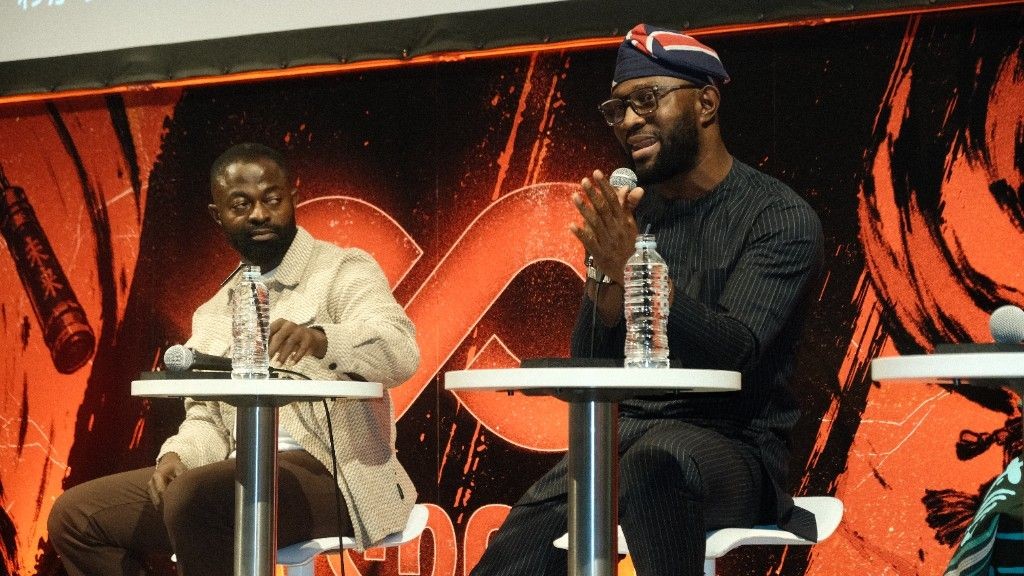
Our co-founder and CEO, Babatunde Adebajo, spoke at both IVS2026 and Global Entrepreneurs & Investors Kyoto 2026, sharing why we believe Africa represents an important growth market for manufacturers and exporters across Asia and how Yala is making it easier for them to enter and grow across the continent.
Africa is a market for today
At IVS2026, Babatunde joined investors and founders for “BIG Exploding Giants! – India & Africa's 3 Billion People Market Frontline,” a conversation about the growth of Africa and India and what these markets mean for Japanese companies and investors looking for new opportunities.
For Babatunde, the opportunity is already here. Africa is home to around 1.5 billion people and one of the youngest populations in the world, while trade between the continent and the rest of the world already runs into the trillions of dollars.
Japanese companies have a long history of selling into African markets, from automobiles to the high-grade machinery used by businesses and industries across the continent. But entering and growing in individual African markets can still be difficult.
Manufacturers and exporters need to understand where demand exists, find and verify the right distributors, navigate different regulatory environments and currencies, collect payments and, increasingly, help distributors access the financing they need to place larger orders.
These are some of the problems Yala is building the Trade Desk to solve.
As Babatunde told the audience in Kyoto:
Africa is not the future market. Africa is the market right now.
He also made the case for a deeper relationship between Japan and the continent:
Japan has a strong history of trade execution and patient capital. I think Africa really, really needs Japan's trade execution expertise and patient capital.
Making it easier to enter African markets
Babatunde also spoke at Global Entrepreneurs & Investors Kyoto 2026, another gathering of investors and founders from Japan, Africa and other international markets.
There, we shared the practical challenges manufacturers face when expanding across Africa and how Yala is building a simpler way to manage that expansion.
A manufacturer in Japan looking to enter Nigeria, Senegal or Côte d'Ivoire may need to find different distributors in each market, verify those businesses, understand local regulations and languages, manage orders across different currencies and work out how payments get back to headquarters.
Yala brings those parts of the relationship into one Trade Desk.
Manufacturers and exporters can use Yala to understand markets, find and verify distributors, manage orders, collect payments locally and offer eligible distributors financing for their purchases.
The goal is simple: make it easier for businesses around the world to find customers across Africa and keep trading with them once those relationships begin.
Beyond the stage
Our time in Kyoto wasn't only about speaking at conferences.
Together with Uncovered Fund and SGGrow, we spent the week meeting companies, investors and founders interested in the opportunities emerging between Africa and Asia.
We met with representatives from Suzuki Corporation to discuss African markets and the opportunity for Japanese manufacturers to reach and work with distributor networks across the continent.
We also met with representatives from Sony Family Office and SBI Group Japan, sharing what we're building at Yala and discussing the growing commercial opportunity between Africa and Asia.
Those conversations reinforced something we see regularly at Yala. There is significant interest in African markets. The harder questions for manufacturers are often much more practical: Where should we sell? Which distributors should we work with? How do we manage those relationships? And how do we keep trade moving once it starts?
Those are the questions we're building Yala to answer.
From conversations to trade
One of the most encouraging outcomes from the trip has already moved beyond conversation.
In Kyoto, we met an Indian footwear manufacturer producing affordable sneakers and sandals and looking to grow its business in Africa.
The manufacturer is now selling into Nigeria through Yala.
It's a relatively simple example of the much larger opportunity we went to Japan to discuss.
Across Japan, India and the rest of Asia, there are manufacturers producing products for which there is real demand in African markets. Across Africa, there are distributors looking for new manufacturers and products to bring to their customers.
The opportunity is not simply to introduce the two.
It is to give manufacturers the market knowledge, distributor relationships, payments, financing and tools they need to build lasting businesses across African markets.
That's what we're building with the Yala Trade Desk.
And as we build more of these connections, we get closer to our larger ambition: connecting African markets to each other and to the world.